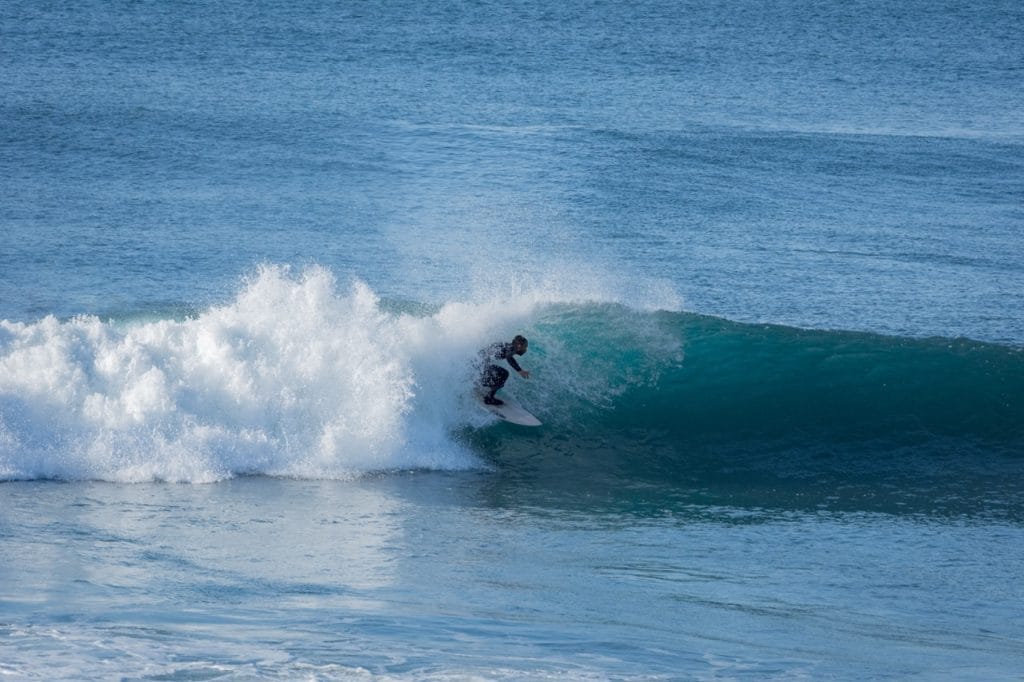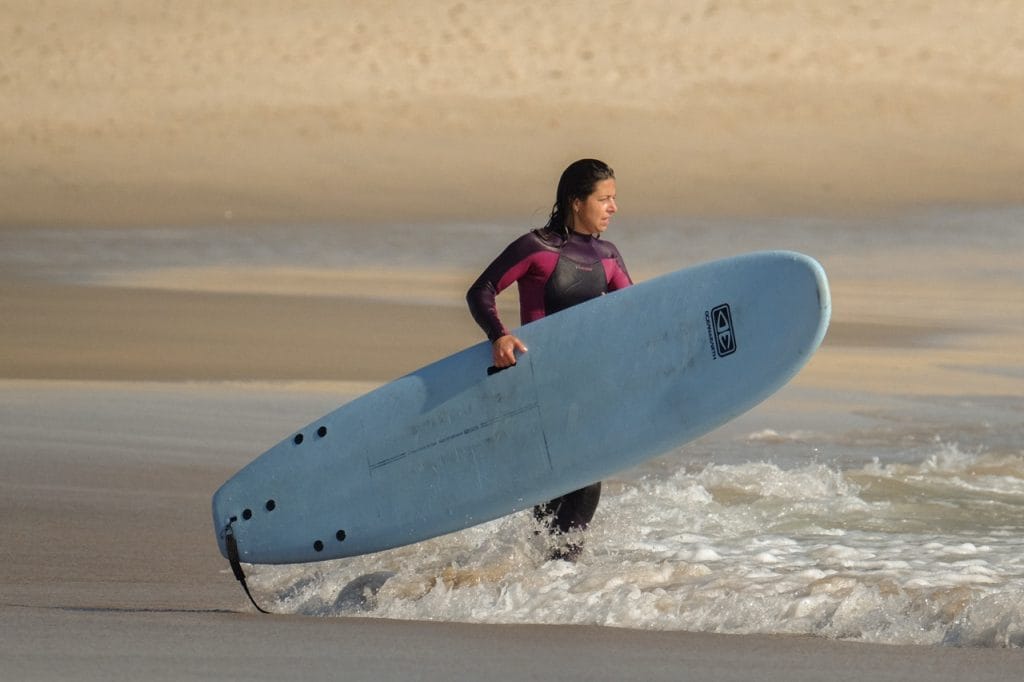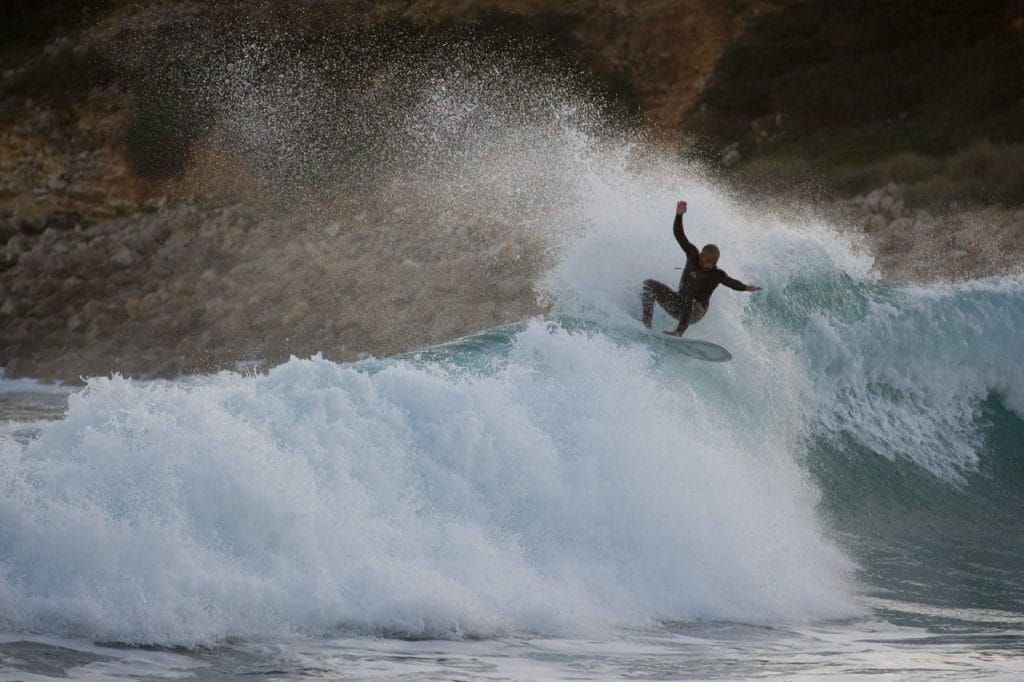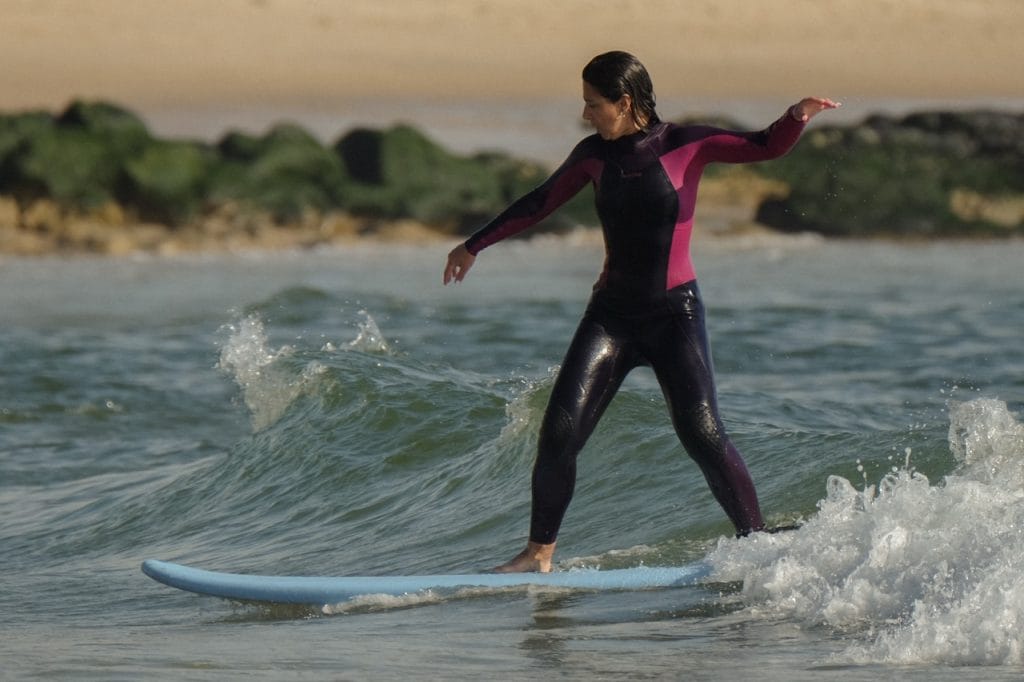
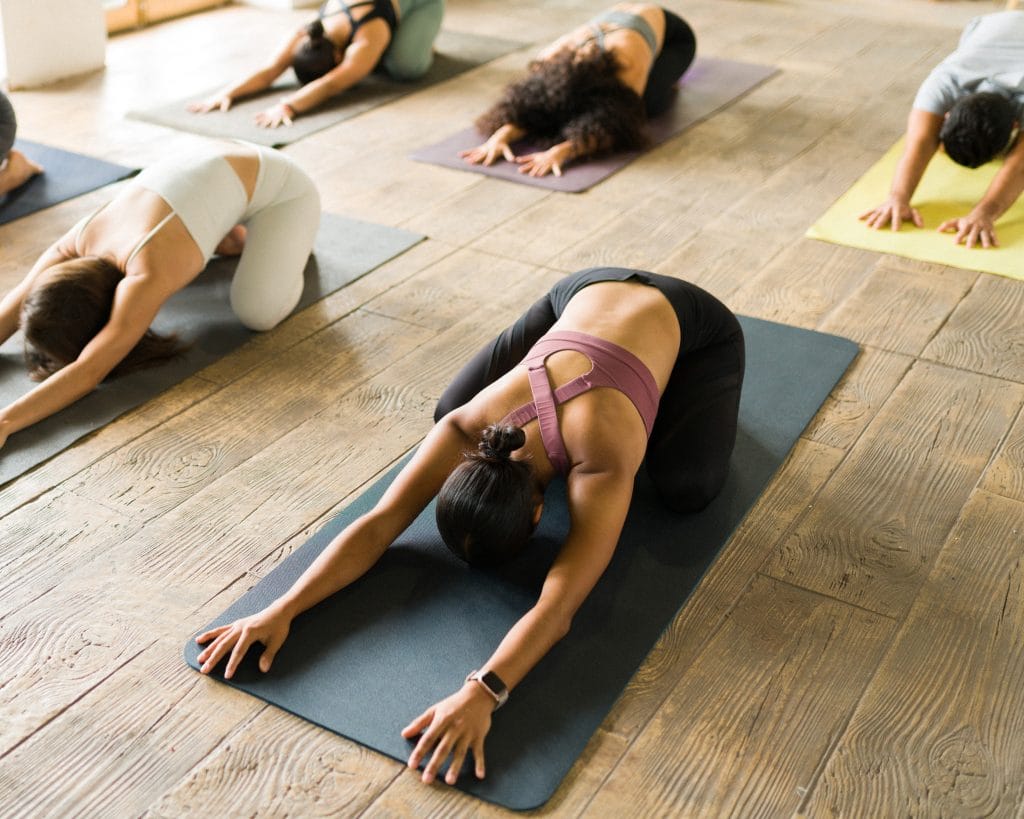
At first glance, surfing and yoga seem like polar opposites. Surfing is all about adrenaline, intensity, strength and
a constant (yet respectful) battle with the waves. Yoga is stillness, control, breathing and
introspection. Yet it is precisely in this contrast that the magic lies: they are the perfect pair.
At Step by Step Atlantic, we don’t see yoga merely as a relaxing activity, but rather as
an essential tool for performance and recovery for any surfer. We’ll explain how
It works:
1. Hip Mobility and the “Take-off”
The movement of moving from a lying position to standing on the board (the take-off) requires extreme agility and hip flexibility. If you spend the week sitting in an office, your hips are stiff. Yoga poses (such as Pigeon or Warrior) stretch and loosen up your hips, making your take-off much smoother, quicker and less likely to cause knee injuries.
2. Core Balance and Stability
To stay upright on a moving surface (the wave), you need strong core muscles. Yoga’s transitions and balancing poses strengthen your core (abdominal and lower back area) and your ankles. The result? Greater stability and control on the board.
3. Lung Capacity and Panic Control
We’ve all been there: that moment when we fall and find ourselves underwater for a few seconds (the infamous wipeout). The secret to dealing with the shock isn’t physical strength, but the mind. Through yoga breathing techniques (Pranayama), you learn to oxygenate your body more effectively and stay calm in stressful situations, saving precious energy in the water.
Your Recovery Ritual
After a strenuous morning paddling against the current, your shoulders, arms and back will be aching. Our yoga session focuses on stretching precisely these overworked areas, speeding up muscle recovery so that you’re ready for another session the next day, without that typical stiffness.