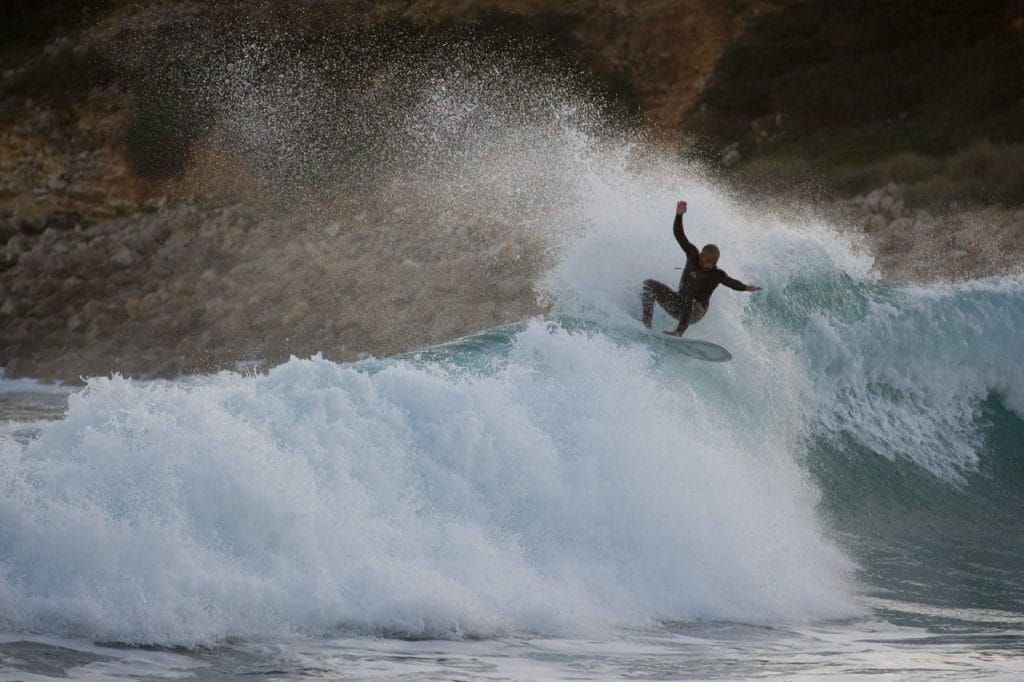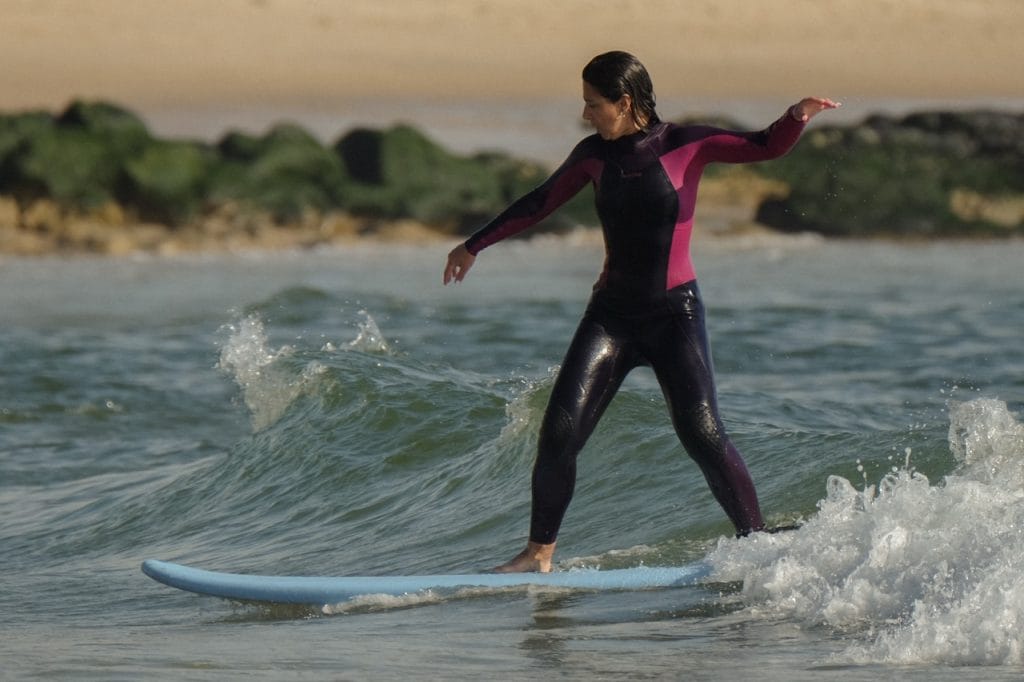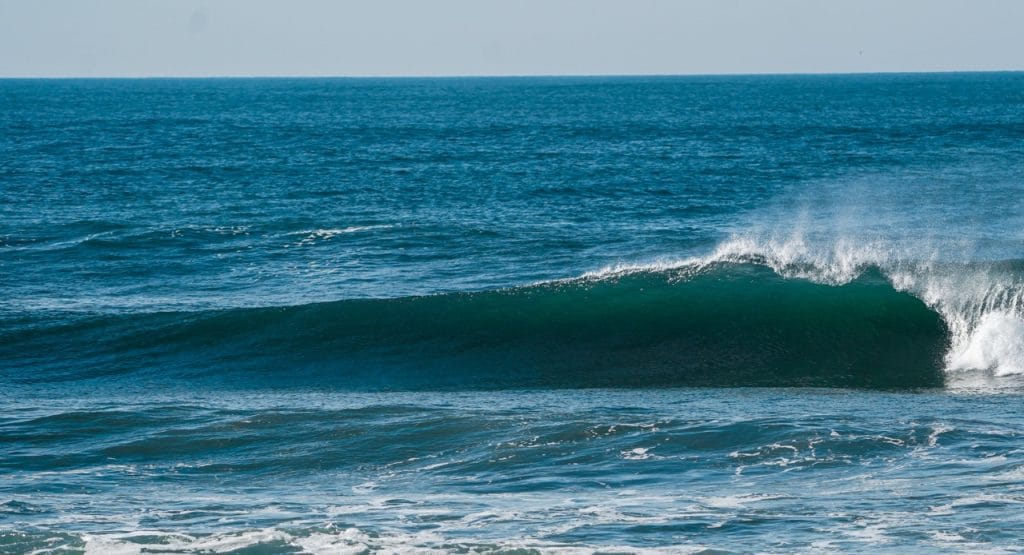
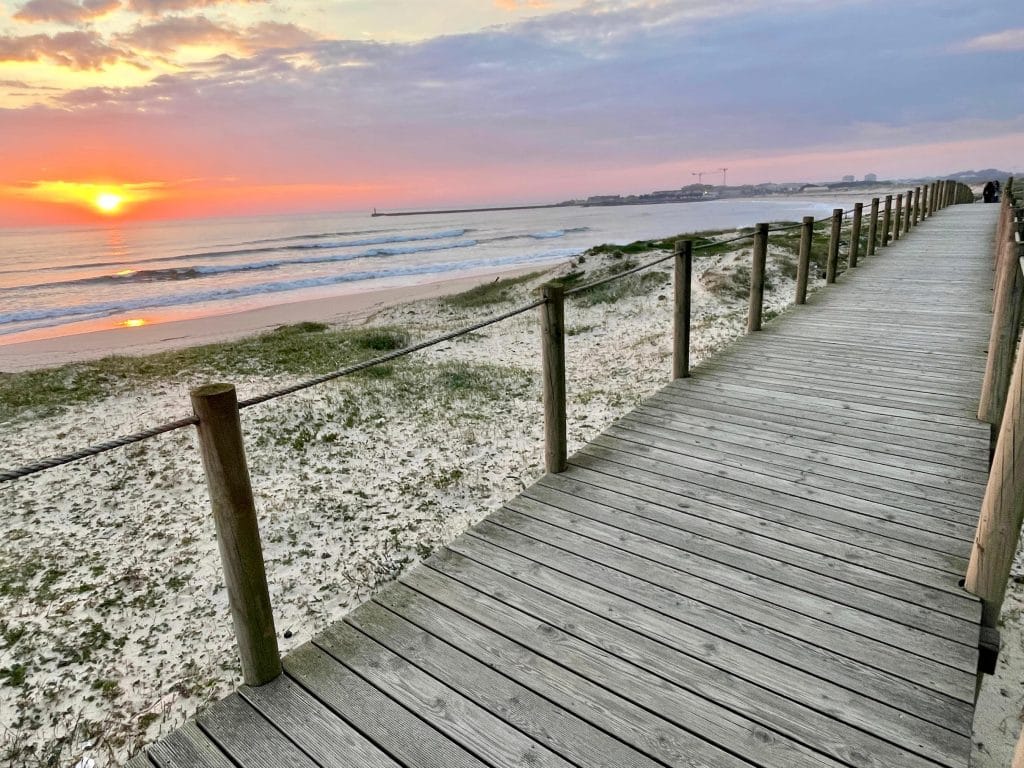
The Portuguese Coastal Way is one of the most popular variants of the Way of St James, and the stage between Porto and Vila do Conde is, for many pilgrims, their first real contact with the Atlantic. Around 28 kilometres on foot, almost always with the sea on the left, wooden walkways and the particular light of northern Portugal.
This guide brings together everything you need to know before you start: distances, stopping points, difficulty of the route and travel options. accommodation along the way.
Distance and estimated time
The official Porto-Vila do Conde stage is approximately 28 kilometres long, with an average walking time of between 6 and 8 hours, depending on the pace and stops. Many pilgrims choose to split the stage in two, staying overnight in Matosinhos or Vila Chã before arriving in Vila do Conde.
Where the stage begins
The traditional starting point is the Porto Cathedral, where pilgrims usually get the first stamp on their credentials. You leave the city via Foz do Douro, passing the Castelo do Queijo until you enter Matosinhos.
Route and points of interest
From Matosinhos, the Coastal Path almost always runs alongside the sea:
- Leça da Palmeira - Siza Vieira's Tidal Pools, a quick stop overlooking the Atlantic.
- Angeiras Beach - a long fishing beach with Roman salting tanks.
- Vila Chã - small fishing village, a common option for splitting the stage.
- Mindelo - next to the Mindelo Ornithological Reserve, a protected area with dunes and pine forests.
- Tree - arriving in the coastal area of Vila do Conde, with the walkway continuing to the centre.
- Azurara and Vila do Conde - end of the stage, with the Monastery of Santa Clara visible in the distance.
Difficulty and terrain
The stage is considered easy to moderate. The terrain is mostly flat, alternating between wooden walkways, pavements and small stretches of sand. The biggest challenge is usually the distance and exposure to the sun and wind - the walkway has no shade for most of the route.
Marking the rail
The yellow arrows and scallops are clearly visible throughout the stage. In urban areas (Porto, Matosinhos, Vila do Conde) the markings can be scattered, but apps such as Buen Camino or Wise Pilgrim cover this route well.
Where to sleep at the end of the stage
Vila do Conde offers several accommodation options, but many pilgrims prefer to stop before the city centre, in a quieter area by the sea. Our guesthouse in Azurara sits directly on the Caminho walkway, just a few steps from the beach - ideal for those who arrive at the end of the day in need of silence, a hot shower and a good breakfast before heading off to Esposende or Apúlia.
For pilgrims who need additional support, we also offer transfer from Porto airport.
FAQ
Is it better to do the Coastal Way or the Central Way? The Coastal Route is more scenic and cooler in summer, with the Atlantic almost always present. The Central Way is more historic and rural. Both lead to Santiago.
Can I do this stage in two days? Yes, and it's a reasonable option. Vila Chã or Mindelo are the natural places to split up.
Is there drinking water and cafés along the way? Yes, especially in Matosinhos, Vila Chã, Mindelo and Árvore. Even so, we recommend taking at least 1 litre of water.
Ready to start your Camino? Check guesthouse availability or check out our guide for pilgrims with all the useful information.